When severe weather sirens sound, the shelter that saves lives is the one people can reach in seconds. For decades, “storm shelter” meant a hole in the yard or a hatch in the garage floor. Today, above ground storm shelters have changed that assumption, and accessibility – not just structural integrity – sits at the center of it all.
At System 1, we install FamilySAFE storm shelters across homes, schools, and businesses in high-risk regions, and the question we hear most often from customers is not “will it survive a tornado?” It’s “will everyone be able to get inside in time?” That single question exposes the core advantage of above-ground shelter design, and it is worth examining in detail.
The Access Problem of Underground Shelters
Traditional underground storm shelters and underground shelters have protected families for generations, and for a long time they were the only option available. But ground units come with structural compromises that have nothing to do with tornado strength and everything to do with how people actually reach them. A hatch set into the yard or garage floor typically opens outward or lifts upward, often requiring two hands, physical strength, and enough time to descend a ladder or narrow staircase. For elderly members of the household, young children, or anyone with limited mobility, those extra seconds can be the difference between reaching safety and being caught in the open when a tornado touches down.
Heavy rains compound the problem. Underground storm shelters are essentially buried boxes, and water can find its way inside with relative ease. Flooding is one of the most commonly reported drawbacks of underground shelters – not structural failure. A flooded shelter is not a safe place, no matter how well its walls were engineered.
Engineered for Speed
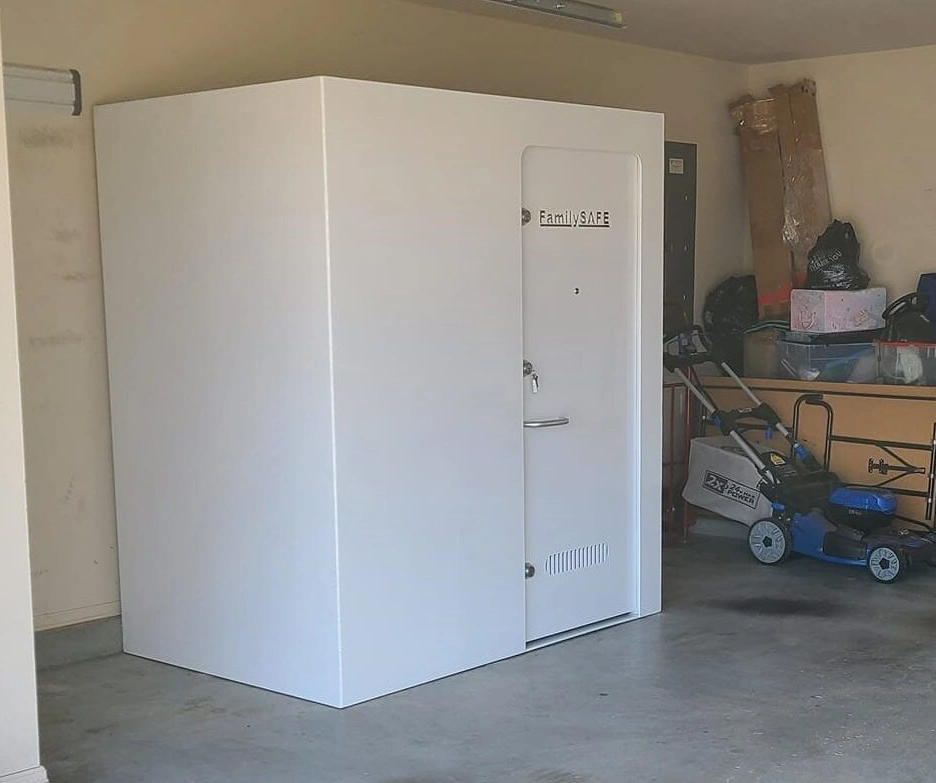
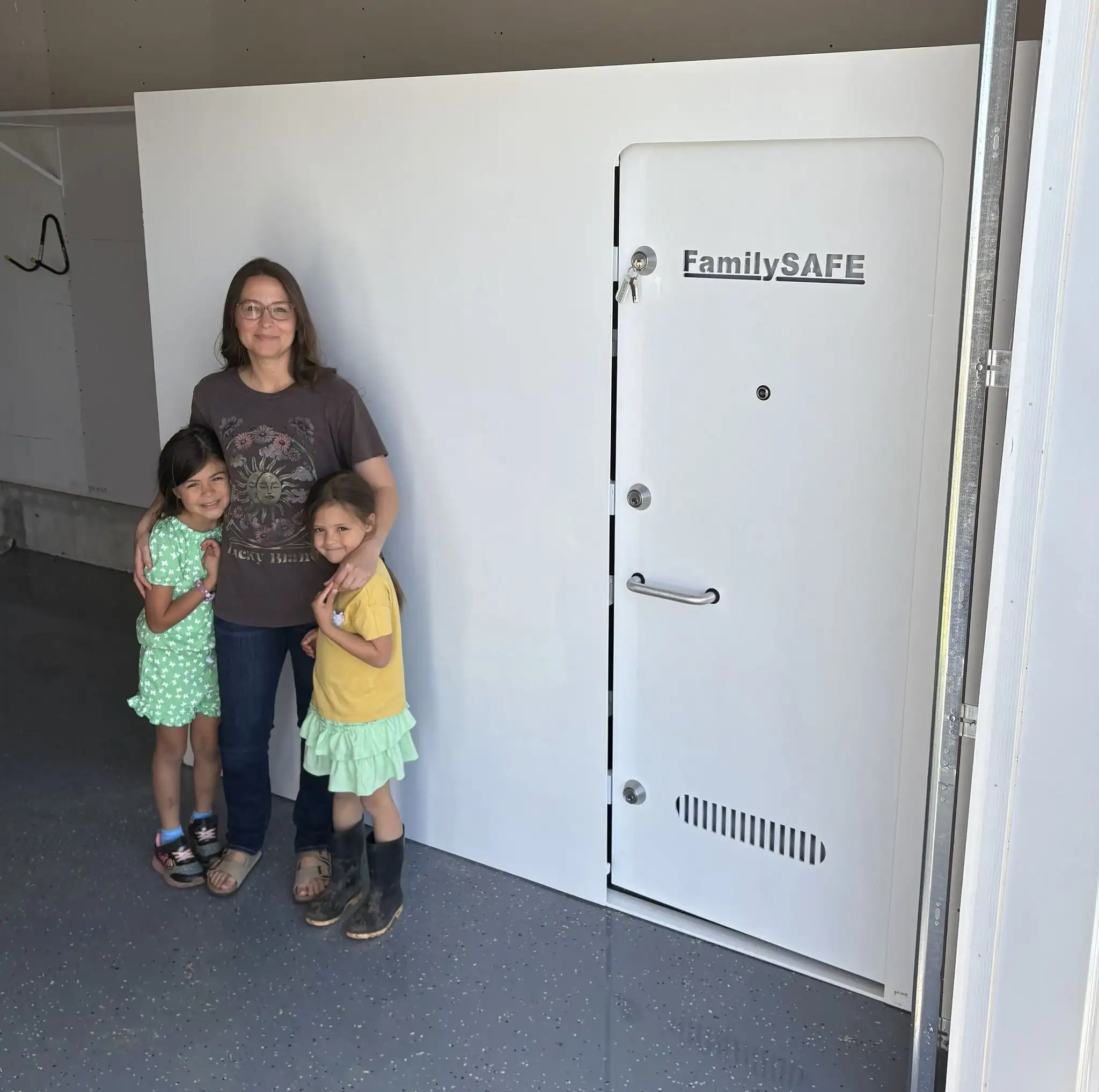
Above ground storm shelters address this directly by removing the barrier altogether. Installed directly onto a concrete slab in a garage, utility room, or closet, a FamilySAFE above-ground shelter is reached the same way any other room in the house – through a door, at ground level, with no ladder, no lifted hatch, and no delay. When severe weather events arrive with only minutes of warning, that difference in access time means protection.
This matters most for elderly members, those with limited mobility, and children who may not be physically capable of descending into a ground shelter unassisted. An above ground safe room lets everyone seek shelter independently and immediately, which FEMA guidelines identify as critical to reducing injury during tornadoes and other severe weather events.
Built to Withstand the Full Force of Nature
Accessibility only matters if the shelter itself can withstand what it’s built to protect against. This is where independently verified testing separates a quality shelter from a marketing claim.
FamilySAFE shelters are tested at Texas Tech University’s National Wind Institute, one of the world’s leading engineering research centers for tornado and wind science, and the only facility ever to conduct occupied testing on a shelter with a person inside. The testing simulates extreme winds exceeding 250 mph, and FEMA itself notes that a properly designed and constructed tornado shelter can offer occupants “near absolute protection” – the standard every FamilySAFE unit is engineered to meet.
The results speak for themselves. Sixteen FamilySAFE shelters have taken direct hits from EF4 and EF5 tornadoes with zero structural failures. No properly installed FamilySAFE shelter has ever failed, and no life has ever been lost inside one. That record holds up against high winds and flying debris, as every unit is impact tested to the standards FEMA requires, including resistance to a 15-pound 2×4 fired at 100 mph – representative of the debris that turns a house into a hazard during a tornado.
These shelters are also FEMA compliant, built to meet or exceed both FEMA P-361 and ICC-500 requirements, the two benchmarks that govern storm shelter safety and design across the country. FEMA is careful to note that it does not certify individual products, so what matters is independently verified engineering and stamped drawings from licensed engineers.
Protection That Extends Beyond the Storm
An above ground safe room’s accessibility advantage is not limited to tornadoes. Because these shelters sit at ground level with reinforced steel walls and impact-tested doors, they double as a secure space during other emergencies, such as a home invasion, a house fire, or any situation where a family, business or community needs a fast, defensible place to go. A shelter that is reachable in seconds, has a door built to resist forced entry, and gives occupants a controlled space to rest and wait for first responders. This offers value that extends well past tornado season.
For families who keep emergency supplies stored inside, such as water, first aid, lighting, and communication tools, an accessible shelter also supports extended stays during flooding, prolonged power outages, or any severe weather event that may keep a household confined for hours.
Placement, Installation and Getting Your Money’s Worth
Above-ground design also simplifies where a shelter can go. Because there is no excavation, no buried foundation, and no drainage engineering required, above ground shelters can be installed in a garage, utility room, closet, under a staircase, or in the yard near the house – whichever location offers the fastest access. Each unit is anchored to the concrete floor with an engineered anchoring system, which keeps the shelter secure and structurally connected to the house without the cost and disruption of digging.
This flexibility also protects your investment. An underground storm shelter buried in the yard can be problematic to relocate, inspect and maintain. Whereas, an above-ground unit bolted to a concrete slab is easy to access for inspection, and is built for long-term use without the maintenance burden of anything buried underground. This combination of accessibility, durability and low-maintenance is a significant part of getting your money’s worth.
Making an Informed Decision for Your Family
Choosing between an above-ground and underground shelter is not just a construction decision – it is a decision about who in your family can reach safety when it matters most. Loved ones with limited mobility, young children, and elderly members of the household all benefit from a shelter that removes physical barriers. When you combine that accessibility with independently verified strength-testing at a respected engineering research center, FEMA-compliant construction, and a real-world record of survived direct hits, the case for above-ground protection becomes difficult to ignore.
At System 1, we are a residential and commercial installer that has helped hundreds of customers across high-risk regions make this informed decision by installing FamilySAFE storm shelters engineered for exactly this purpose: fast access, certified strength and peace of mind when it matters most.
Stay Safe. Stay Protected.
If you are considering a storm shelter for your home, business, or property, contact us today. As a company with decades of residential and commercial installation experience, our team can help you assess your space, choose the right above-ground FamilySAFE shelter, and install it correctly – so it is ready and accessible for all who need it, the moment severe weather strikes.